
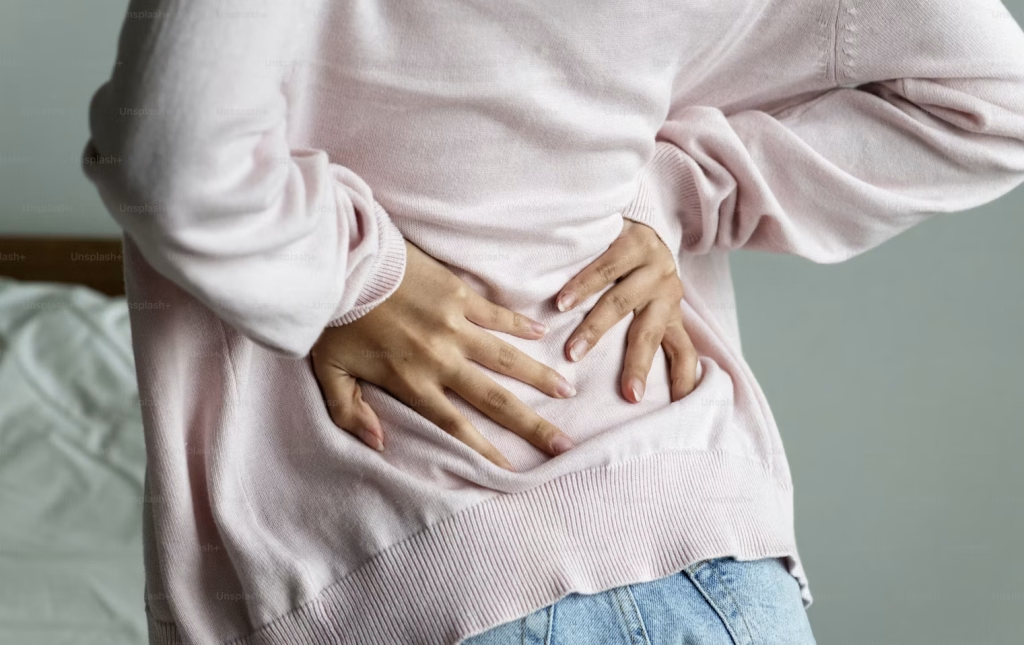
If you’ve ever stood up from your desk after a long afternoon, felt a sudden flare – up in your lower back, and wondered, “Is this just a pulled muscle, or is it sciatica?” – you’re far from alone.
In clinic, I frequently hear patients use “sciatica” as a catch-all phrase for almost any type of back pain. However, clinically speaking, general low back pain and sciatica are two distinct issues with different underlying causes, symptom patterns, and management strategies.
Understanding which one you’re experiencing is the first step towards getting the right relief. Here is a practical guide to help you tell the difference.
General Low Back Pain: Mechanical & Muscular Stiffness
General low back pain is extremely common and is typically mechanical in nature – meaning it stems from the muscles, ligaments, or small joints (facet joints) of the spine.
What it feels like:
- The Sensation: A dull ache, localised throbbing, or a feeling of deep tightness and stiffness. Your back might feel “locked up” when you try to stand after sitting for a while.
- The Location: Pain stays primarily centred in the lower back or along the beltline. It may occasionally spread slightly into the upper buttock, but it rarely travels past the hip.
- Common Triggers: Sitting for prolonged stretches, sudden twisting movements, heavy lifting without adequate preparation, or general fatigue in the postural muscles.
- How it Behaves: It often improves with gentle movement, warm heat packs, or changing positions. It tends to hurt predictably with specific movements, like bending down to tie your shoes.
Sciatica: Sciatic Nerve Irritation
Sciatica isn’t a condition itself, but rather a symptom of irritation or compression affecting the sciatic nerve – the longest and widest nerve in your body, which runs from your lower spine down into your feet.
What it feels like:
- The Sensation: Sharp, shooting, burning, or “electric shock” sensations. Sciatica is frequently accompanied by nerve-related symptoms like paraesthesia (pins and needles, numbness, or a feeling of weakness in the leg).
- The Location: Sciatica follows a distinct nerve pathway. It starts in the lower back or buttock and travels down the back or side of the leg, often extending past the knee towards the calf, ankle, or toes. It typically affects only one side.
- Common Triggers: Compression of the nerve root, often caused by a bulging or herniated disc, joint inflammation, or localised spatial narrowing.
- How it Behaves: It can be sharply aggravated by sudden increases in pressure, such as coughing, sneezing, or sitting for extended periods. Straightening the leg or bending forward often sends a sharp pain signal directly down the leg.
At-a-Glance Comparison
| Feature | General Low Back Pain | Sciatica |
| Primary Location | Lower back, waistline, upper glutes | Lower back, travelling down the back/side of the leg past the knee |
| Pain Quality | Dull ache, stiffness, throbbing, localized tightness | Sharp, shooting, burning, electric shock-like |
| Sensory Symptoms | Muscle tightness; no nerve sensations | Pins and needles, numbness, weakness in the leg/foot |
| Aggravating Factors | Static postures, bending, twisting | Coughing/sneezing, prolonged sitting, leg raising |
| Relieving Factors | Heat, gentle walk, frequent position changes | Rest positions that relieve nerve tension, gentle decompression |
Red Flags: When to Seek Immediate Care
While most back pain and sciatica resolve with conservative management and targeted movement, certain symptoms require immediate medical attention.
Seek urgent medical evaluation if your back pain is accompanied by any of the following:
- Saddle anaesthesia: Numbness or loss of sensation in your groin, buttocks, or inner thighs (the areas that would touch a saddle).
- Bowel or bladder changes: New difficulty urinating, loss of control, or bowel incontinence.
- Progressive weakness: Rapidly worsening weakness in your leg or foot (such as your foot catching on the floor when walking, known as “foot drop”).
- Unexplained systemic symptoms: Severe pain accompanied by unexplained fever, chills, or sudden weight loss.
What to Do Next
If your back is feeling sore or stiff, the old advice of staying in bed for days is
outdated. For both general low back pain and mild nerve irritation, gentle, frequent movement is your best friend. Short, regular walks and avoiding long periods in a single position help keep the spine lubricated and reduce muscle guarding.
If your symptoms are persistent, shooting down your leg, or hindering your day-to-day routine, a professional assessment can help pinpoint the exact driver of your pain and get you on a tailored rehabilitation path.
Have you been dealing with back tightness or leg pain that won’t settle? Get in touch with the clinic to book a thorough assessment.